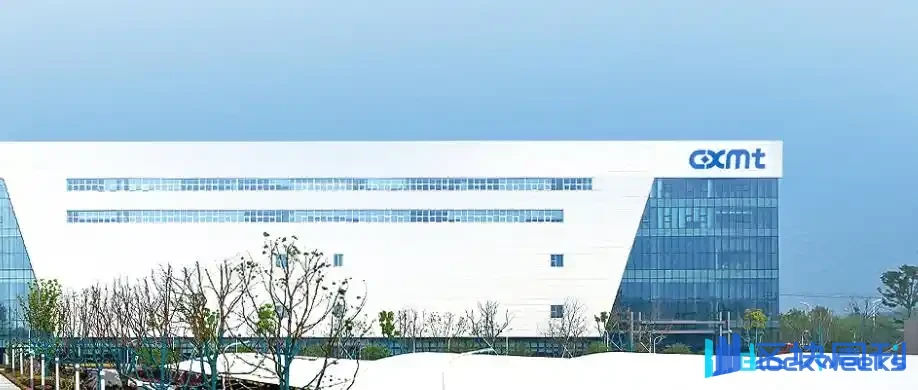
After Changxin Technology went public, Hefei finally took back the banner of "provincial capital."
Previously, netizens joked that Nanjing, the capital of the neighboring province, was the real capital of Anhui. But after Changxin Technology listed on the STAR Market, based on a neutral scenario of a 2 trillion yuan market value, the Hefei state-owned capital system holds approximately 33.1% of shares, corresponding to a market value of over 660 billion yuan, which is almost half of Hefei's total GDP in 2025 (1.4 trillion yuan).
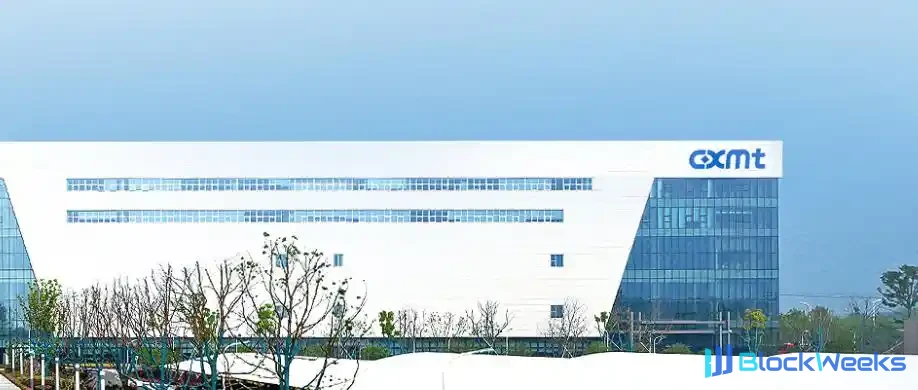
A decade-long gamble earned back half of Hefei, instantly propelling this central provincial capital, which had the least presence, to the forefront of the urban competition in the equity era.
Over the past two decades, the wealth engine of Chinese cities was real estate, but this round has shifted to equity. While other cities are still racking their brains over which track to invest in and whether a wrong investment might become a political mistake, Hefei has already formed an industrial investment matrix of "chips, screens, automobiles, and integration" and has reaped substantial returns.
Why does Hefei always succeed in predicting the next thing that is needed? To figure this out, let's walk into Hefei's two decades of "jumping prophet."
01 Card Verification: Twenty Years, Three Cards
Looking back, from display panels to integrated circuits to new energy vehicles, each successful card verification has reinforced Hefei's investment myth of betting on the right trend.
The first successful card verification was during the 2008 financial crisis when BOE was in a funding crunch, and Hefei entered counter-cyclically, making a groundbreaking decision: to mobilize the entire city to introduce BOE and build the first TFT-LCD 6th generation line in mainland China, with a total investment of up to 17.5 billion yuan. At that time, Hefei's total fiscal revenue was about 30.1 billion yuan, so this one project was equivalent to almost half of Hefei. To raise the money, Hefei even suspended its subway project that year.
This investment was a complete victory. Starting in December 2017, Hefei state-owned capital gradually reduced its stake in BOE, completing the investment exit and netting a profit of about 14 billion yuan.
When it came to 2018-2019, as overseas advanced chips fell under an iron curtain against China, the strategic value of the integrated circuit industry became even more prominent, and Hefei once again attracted industry attention. As early as 2013, Hefei began systematically investing resources to cultivate the integrated circuit industry, including Beijing Ingenic in IC design, Nexchip in wafer foundry, and Changxin Memory.
After nearly a decade of cultivation, Hefei has become one of the few semiconductor cities in China that possesses the entire industry chain of design, manufacturing, packaging, and testing. Among them, Changxin Technology is the most dangerous card, because memory chips are recognized as a money-burning black hole. Since its establishment, Changxin has been losing money, and in 2022 it once suffered a huge loss of about 30 billion yuan.
For ten years without profitability, Hefei stubbornly accompanied it with tens of billions of principal, until July 27, 2026, when Changxin Technology landed on the STAR Market. And the return on this card is also the largest return multiple in Hefei's investment history so far.
In new energy vehicles, Hefei won again.
In 2019, NIO suffered a huge loss of 11.4 billion yuan, and its cash flow was once so tight that it could only support three weeks. While many cities were still waiting to see whether electric vehicles were a false demand, Hefei acted swiftly. On April 29, 2020, NIO signed an agreement with Hefei state-owned capital and several strategic investors.
Subsequently, NIO established its China headquarters in Hefei and built an integrated base for R&D, sales, and manufacturing. Hefei also followed up by introducing BYD in 2021 to establish a production base; around 2024, Volkswagen's first joint venture in China focused on new energy vehicles, Volkswagen Anhui, officially rolled off its first new car.
By 2025, Hefei has gathered six complete vehicle manufacturers including JAC, NIO, BYD, Volkswagen, Changan, and Ankai, as well as a complete industrial chain around batteries, motors, electronic controls, and intelligent cockpits.
Hefei, which invested in the new energy vehicle industry, not only realized tangible returns but also "attracted investment through investment," creating a hundred-billion-level industrial cluster.
From land finance to equity finance, most cities are still in the exploration stage, while Hefei has accumulated nearly two decades of industrial investment experience. At that time, some said Hefei was a gambling city, but Hefei itself did not agree. So, how do we distinguish speculation from investment?
02 A Big Gamble? Hefei, I'm Not a Gambler
Are Hefei's wins really just luck? Yu Aihua, then Secretary of the Hefei Municipal Party Committee, gave a widely quoted answer on CCTV's "Dialogue" program: "It's not venture capital, it's industrial investment; not gambling, but hard work."
Throwing money is the easiest part of investment; anyone with money can do it. The key is what is done after the money is thrown. In 2010, there were almost no funds across the country that could invest in integrated circuits and high-tech startups. Government funds dared not invest, with the hat of "loss of state-owned assets" hanging over their heads; at that time, it was better not to invest than to invest wrongly. Personal funds were not interested; private equity funds of that era, such as coal bosses and oil bosses, preferred to invest in real estate and entertainment. Overseas angel investors, although able to bear high risks, often favored projects like internet companies that could be benchmarked against US stocks, and looked down on these early domestic hard-tech projects.
This led to a situation where domestic industrial funds basically lacked the full-process capability of "fundraising, investing, managing, and exiting," and needed to explore a complete mechanism on their own. Sometimes, after giving out the money and buying the company, the pain just began. They had to think about how to operate well, how to increase the company's value, how to grow it from small to large, and not just think about flipping the company for a profit.
Is Hefei really gambling? The answer is clear. Let's break down each step of fundraising, investing, managing, and exiting to see how Hefei did it.
First is fundraising. Where does Hefei's investment money come from? Projects like BOE and Changxin involve hundreds of billions or even trillions, and no city's fiscal budget can afford that. Hefei's answer: turning appropriations into investments, and funds into fund-of-funds.
In 2015, Hefei consolidated 18 billion yuan of government funds at once and reorganized them into three state-owned capital platforms: Jiantou, Chantou, and Xingtai. Instead of rushing headlong into everything, each had its own focus. Among them, Hefei Jiantou focused on introducing leading enterprises, with BOE, NIO, and Nexchip all landing under its leadership, characterized by bold bets and long-term holdings. Hefei Chantou focused on investing early, small, and in technology. Hefei Xingtai, as the financial backing, provided financial services such as equity, loans, bonds, guarantees, insurance, and leasing for these key projects and upstream and downstream enterprises.
In addition to government investment, they also partnered with market-oriented institutions such as CITIC and CICC to build a "4+2+N" fund structure covering the entire cycle of seed, angel, sci-tech, and industrial stages, driving nearly 400 billion yuan of social investment into Hefei's industrial chain, leveraging larger amounts of capital and social capital to safeguard local industries.
The next question is: where to invest the money?
In uncertainty, Hefei seeks the most certain tracks. During the 2008 global financial crisis, international panel giants cut back on investment, and the window for technology introduction briefly opened to China.
At that time, cities across the country were generally still in the model of land finance plus industrial infrastructure, with almost no experience in high-tech investment. High-generation LCD lines were even more capital-intensive, extremely risky, and everyone avoided them. Only Hefei took out 17.5 billion yuan, almost equivalent to half of Hefei's fiscal revenue at the time, to support BOE in introducing the 6th generation line.
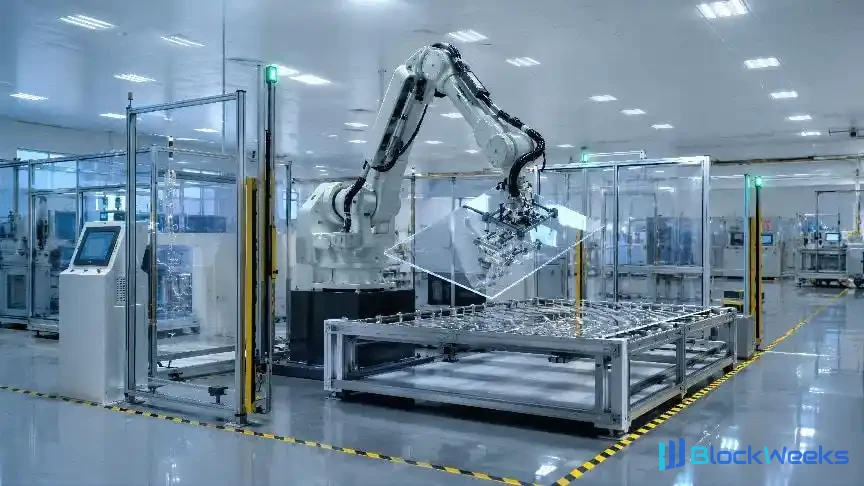
In 2010, the 6th generation line went into mass production, producing the first 32-inch LCD screen in mainland China, breaking foreign monopoly. At that time, the investment was based on the hard logic of domestic substitution.
Eight years later, the same applies to ChangXin. Display screens were localized, but the chips driving the screens were still highly dependent on imports. ChangXin Technology positioned itself in chips, and Hefei bet even more fiercely, investing a cumulative 24.8 billion yuan. In 2022, it faced huge losses, but Hefei accompanied it all the way to 2025, watching it grow into the world's fourth-largest DRAM manufacturer, waiting for the AI super cycle, and memory became a scarce resource in the industry.
The third question, and the most easily overlooked one: after investing, how to manage it well and help enterprises grow and strengthen?
The logic of venture capital is to invest, wait for listing, exit, and leave. Industrial investment is different; after investing, the real work begins. Hefei's chain supplementation and chain strengthening cannot be ignored.

After BOE landed, upstream and downstream core supporting enterprises such as Corning's glass substrates and Sumitomo Chemical's polarizers settled in one after another, bringing over 100 billion yuan in investment and more than 70 supporting enterprises, forming a display industry cluster. There is also integrated circuits, where semiconductor design, packaging, and manufacturing are supplemented around the upstream and downstream of the industrial chain, increasing system returns.
Exit is the last step of fundraising, investing, managing, and exiting, and it is also a sensitive step. If the pace of exit is not handled well, affecting enterprise operations, or if the money after exit is not reinvested, it will trigger negative reactions.
So far, Hefei's exit mechanism has been relatively restrained. After BOE achieved stable profits, it gradually reduced its holdings in batches. After NIO emerged from difficulties, Hefei cashed out approximately 10.5 billion yuan in total, while still retaining about 8% equity. After ChangXin goes public, Hefei will also have to wait until after the lock-up period to gradually exit.
It can be said that twenty years of practical combat have honed Hefei's comprehensive capabilities in fundraising, investing, managing, and exiting in industrial investment. Only doing buy-and-sell transactions is gambling and speculation. Raising companies to maturity and building up industries—that is industrial investment.
03 The Other Side of the Stock God
Not a gambling god but a stock god. After years of practical combat, Hefei has begun to shed the title of "gambling city," and Hefei's state-owned assets are called "the best industrial investment." Currently, various regions are shifting from land finance to equity finance, so Hefei has become the object of emulation and trend-following by more and more cities.
But let's be calm. Has Hefei hit the windfall every time?
The list of failures not written into the fantasy novels is the other side of the stock god myth.
In 2009, display technology routes were still controversial. Hefei bet on BOE on one hand, and at the same time, invested in a plasma display panel (PDP) project, establishing Xinhao Plasma. However, as technology evolved, liquid crystal display (LCD) technology eventually became the market mainstream, and plasma technology was phased out. Within three years, Xinhao lost more than 1 billion yuan, the production line was shut down, equipment was dismantled and sold, and this card was regretfully withdrawn.

In 2010, Hefei introduced the then photovoltaic giant LDK Solar and invested in a solar photovoltaic project, which was the world's largest single photovoltaic project at the time. The later story is well known: global photovoltaic overcapacity, EU and US anti-dumping and countervailing investigations, LDK fell into huge difficulties, Hefei's investment suffered another setback, and the investment was almost completely wiped out.
There was also Rongsheng Heavy Industries, which originally planned for the province and city to jointly fund the renovation of waterways, but when the shipping industry winter came in 2013, the Rongsheng system collapsed in a chain. And WM Motor: in 2020, Hefei's industrial investment guidance fund led a 1 billion yuan Series D round, and in 2023, WM applied for bankruptcy reorganization with liabilities exceeding 20 billion yuan.
Add to that the small and medium-sized projects that never made the news. In fact, not all of Hefei's targets are necessarily successful.
Even successful projects are not all one-shot hits in fantasy novels.
For example, with BOE, Hefei Jiantou also "invested and exited, then exited and reinvested," without the domineering aura of a single decisive bet. It relied on assessing the situation within a large cycle and continuously increasing its bets.
Hefei's strategic tracks are not static either. In the early days, the "qi" in "core, screen, automobile, and integration" was still "equipment," referring to equipment manufacturing and industrial robots. At the end of December 2020, Hefei officially changed "equipment" to "automobile," echoing the strategic shift to new energy vehicles at that time. The change of one character shows that Hefei is not a prophet; it also has to turn around, and sometimes it has to switch cards and continue playing.
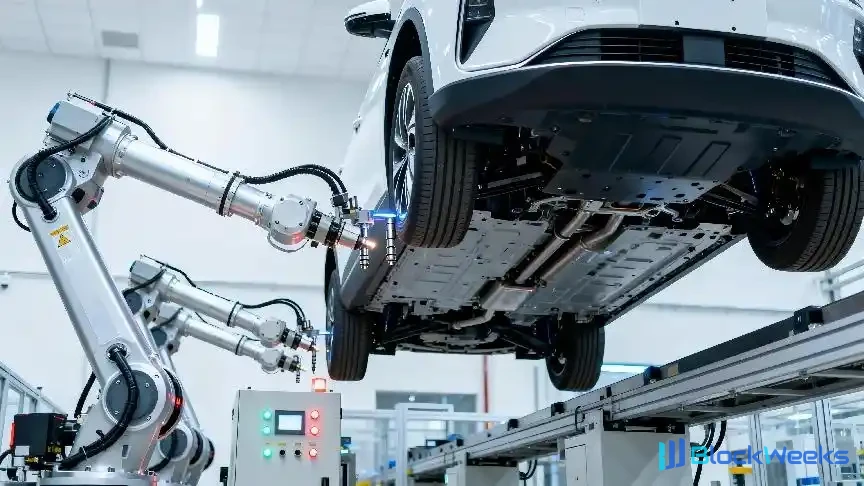
With failures and turns, if this were a movie, Hefei's "God of Gamblers" myth would be shattered. But as industrial investment, Hefei has instead accumulated a weapon not to be underestimated from these failed cards: fault tolerance.
Traditional government guidance funds usually have very low fault tolerance rates, some even requiring zero losses, fearing "loss of state-owned assets." This leads to many being afraid to invest or unable to invest in high-risk, high-return, high-investment technology industries. Therefore, Hefei's success is partly due to seeing the right track direction, and another key is having a fault-tolerant mechanism that dares to bet.
As early as 2014, Hefei was among the first in the country to propose "due diligence exemption and tolerance for failure," which was written into fund management regulations, allowing a 30% overall loss tolerance rate for angel funds and 10% for guidance funds. In 2023, Anhui provincial seed funds had a loss tolerance rate of up to 50%, and the Eagle Plan special fund up to 80%. Allowing eight failures out of ten investments is extremely rare nationwide.
Industrial investment has no myths or legends; it is the fault-tolerant mechanism that accepts failure that gives Hefei the courage to act decisively when others dare not bet.
04 A City That Paints Big Pictures
Rather than a gambling city or stock god, some prefer to call Hefei a city that paints big pictures.
In 1986, a student who had just graduated from the Physics Department of USTC was offered several research directions: crystals, semiconductors, and lasers. At that time, conducting research in these fields in Hefei meant not even having a decent laboratory.
"It didn't even have a laboratory; it was all about painting a big picture for me," the physicist, now with students everywhere, told me in 2026. Then he changed his tone, "When USTC came to Hefei in 1958, saying they would build atomic bombs and missiles, that was also painting a big picture. On a more macro level, studying for the rise of China is also painting a big picture."
Looking back, Hefei's industrial investment can find certainty in uncertainty, a mindset very similar to scientific research exploring unknown territories.
Rather than saying Hefei is a prophet, it is more accurate to say that Hefei's industrial investment style and method of predicting trends resemble scientific research.
First, doing scientific research means daring to challenge the unknown. Only by painting a big picture and having an idea can you possibly succeed. From missiles to semiconductors, quantum, and lasers, the big pictures Hefei painted for scientists back then have all become Hefei's most important industries today. And those cities that dare not even paint a picture do not even qualify to sit at the table.
Of course, doing industry is like doing scientific research; you must also follow national strategies. The lack of chips and screens, energy security, and being choked by others are all rigid demands that the country is bound to address, and the direction itself is highly certain. Only by daring to take on heavy responsibilities can you achieve "big results."
Today, many people want to copy Hefei's homework and predict what the next "chip-screen-auto-chip" will be. Is it quantum, or nuclear fusion, nanotechnology, or AGI?
The track can be copied, but this city's industrial investment mindset may be difficult to replicate. It requires tracing back to earlier times. Back to the implementation of the "Two Bombs, One Satellite" project, back to the long obscurity of being the "most overlooked provincial capital," back to the embarrassment of only being able to paint big pictures for scientists...
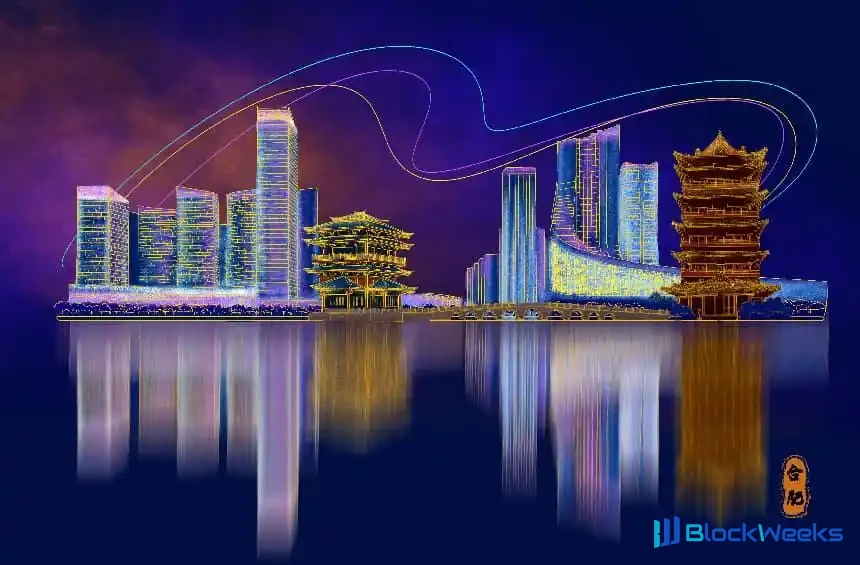
In countless such days, the people of a city learned to accept failure, refined the courage to bet in the unknown and uncertain, endured loneliness, and cooked the painted big picture until it was done and enlarged. Hefei's development model took half a century to become familiar and master, until it became skilled and adept.
There has never been any prophet, nor any Hefei myth; there are only the divine moves left after countless successes and failures that are praised by the world.
This article is from the WeChat public account "Brain Body" (ID: unity007), author: Tibetan Fox.